Workers' Compensation for spray contractors
Workers' compensation for spray contractors requires correct class codes — and most standard agents get them wrong. Foam applicators, polyurea crews, sealcoating operators, and line stripers each have specific classifications that affect your premium and coverage accuracy.
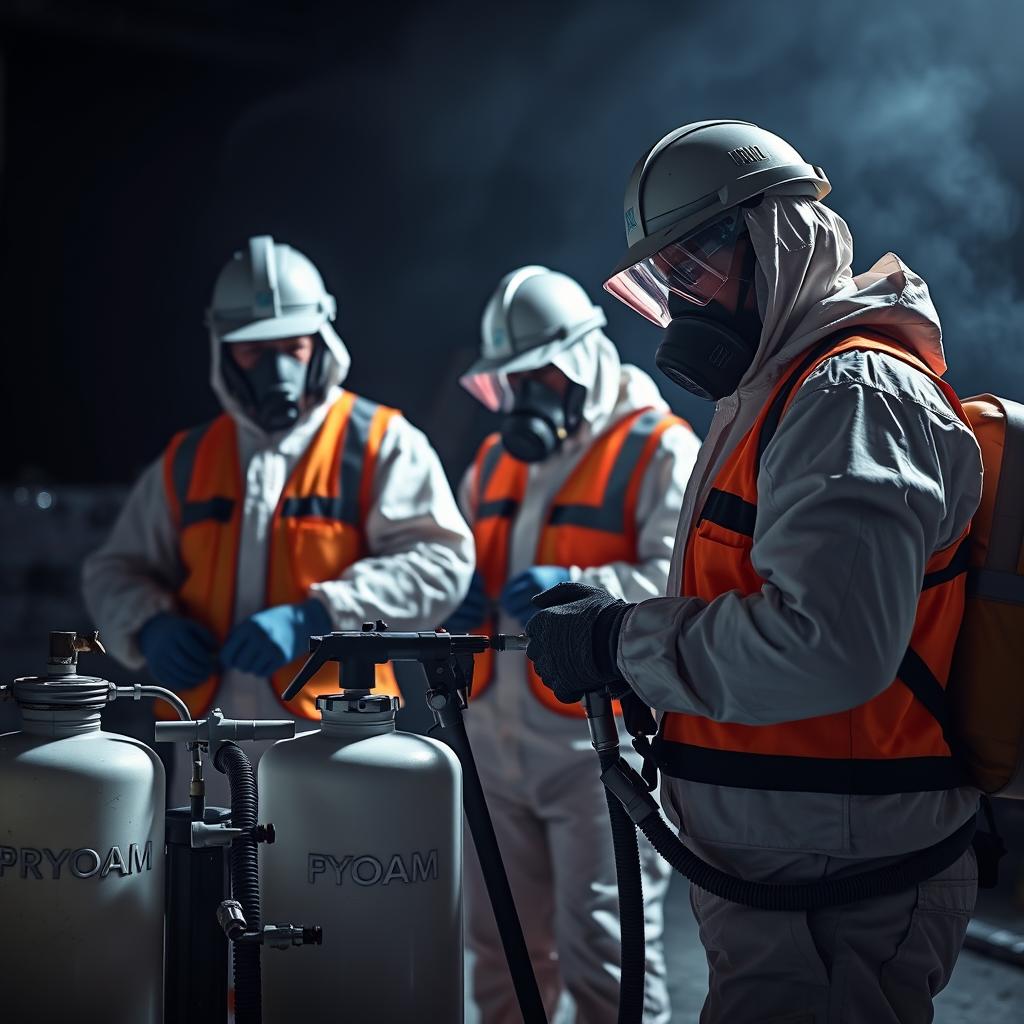
What it covers
- Medical expenses for work-related injuries and illnesses
- Lost wages during recovery from job-site injuries
- Respiratory exposure and chemical illness claims
- Fall injuries on roofing and scaffolding operations
- Chemical burn and eye exposure incidents
- Equipment-related injuries from proportioners and sprayers
- Employer's liability (coverage B) for lawsuits
Who it's for
- Spray foam insulation crews (open and closed cell, roofing and walls)
- Polyurea and polyaspartic applicators
- Sealcoating and asphalt maintenance crews
- Line striping and pavement marking employees
- EIFS installation crews
- Industrial and commercial spray coating crews
Why CCA
- Correct WC class codes for each spray trade — no misclassification
- Carriers familiar with spray foam and coating respiratory exposures
- Experience mod management to keep premiums controlled
- Payroll audit support to avoid year-end surprises
- Bundled with GL and CPL for a complete spray contractor program
Common questions about workers' compensation
The primary code is 5474 (Insulation Work — spray foam, blown-in). However, some carriers and states use different codes for roofing foam vs. wall foam. Polyurea roofing may fall under roofing codes. Getting the right code matters — wrong codes mean overpaying or coverage disputes at audit.
Yes. Respiratory issues from isocyanate and VOC exposure, chemical burns, and fall injuries on roofing are the most common. WC class codes for spray contractors reflect these elevated exposures — which is why proper classification is critical.
Your EMR (or 'mod') compares your actual claims history to expected claims for contractors like you. A mod below 1.0 means lower-than-expected claims and results in WC premium discounts. Above 1.0 adds a surcharge. We help you manage your EMR over time.
Yes. Contractors Choice Agency holds insurance licenses in all 50 states and is actively placing spray contractor programs nationwide. NPN #8608479.
About 15 minutes for most spray contractor programs. We need your spray trades, annual revenue, crew size, and loss history. Call 844-967-5247 or submit the online form.
We work with A.M. Best A-rated (A+ where possible) specialty commercial carriers and managing general agents that focus on contractor insurance. We don't place spray contractors with carriers that exclude spray operations or use incorrect class codes.
Yes. We handle GL, CPL, workers' comp, commercial auto, tools & equipment, umbrella, and inland marine — coordinated into one program. You deal with one agent and one renewal process.
Business name, years in operation, spray trades performed (foam, polyurea, sealcoating, etc.), annual revenue, employee count, vehicle and equipment list, and your current insurance information. Prior loss runs (3 years) are helpful but not always required.
We help you navigate the claims process — understanding what's covered, how to document the incident, and working with the carrier. For complex overspray or CPL claims, we connect you with the right people at the carrier quickly.
A COI is proof of your insurance coverage — typically required by GCs, property managers, municipalities, and commercial project owners before you can start work. We issue COIs quickly, usually same-day, and can add additional insureds as needed.
Premiums are based on your spray trades, annual revenues, payroll, crew size, location, equipment values, and claims history. WC premiums are driven by your payroll and class codes. GL premiums are usually based on revenue. CPL is typically flat or based on revenue and job types.
An additional insured (AI) endorsement extends your GL coverage to a third party — typically a GC, property owner, or project owner — protecting them against claims arising from your work. Most commercial projects require AI status and we add these to your policy as needed.
Yes, though a claims history may affect which markets will write you and at what premium. We work with specialty markets that have experience underwriting spray contractors with prior claims, including overspray incidents and WC claims. We'll be upfront about what your history means for your program.
$1M per occurrence / $2M aggregate is the standard minimum. However, many commercial GCs and project owners require $2M per occurrence. If you work on larger commercial projects, consider a $5M umbrella on top of your base GL limits.
Technically you may not be legally required to carry GL in every state, but virtually every GC and commercial project owner will require it before allowing you on site. WC requirements for sole proprietors vary by state. Most sole proprietors in the spray trades should carry GL and CPL at minimum.
A waiver of subrogation prevents your insurance carrier from pursuing a third party (like your GC or project owner) to recover claim costs. Many commercial projects require waivers of subrogation. We add these endorsements to your policy when required — usually at no or low additional cost.
Call 844-967-5247, email josh@contractorschoiceagency.com, or submit the quote form at sprayinsurance.com/quote. We respond fast — 15-minute quote turnaround for most programs.
Pair it with related coverage
Ready to protect your spray operation?
Get a 15-minute quote from specialists who understand spray contracting — GL, contractor pollution liability, WC class codes, and spray rig coverage.